
How to Date a Truck Driver - A Real Guide for the Women Who Love Them
OTR schedules, late-night phone calls, eleven days a month at home. Here is what dating a truck driver actually looks like - and how the women who make it work approach communication, home time, and the lonely stretches in between.
By the TruckerConnections editorial team · Published March 12, 2026 · Updated May 28, 2026
Can You Make Dating a Truck Driver Work?
Yes - but it asks for a different kind of partner. Three things determine whether the relationship lasts past the first six months on the road:
- Independence first. You need a full life of your own - friends, hobbies, work - that does not pause when his truck rolls out of the driveway.
- Asynchronous communication. Voice notes, video messages, and short check-ins beat live chat. Hours-of-service rules and dead zones make real-time texting unrealistic.
- Protect home time fiercely. When he is back for 34 hours or four days, that time is sacred. Plan around it, not over it.
Understanding the OTR Schedule - What His Weeks Actually Look Like
Dating a truck driver starts with understanding the calendar he lives on, because it is not yours. An over-the-road driver typically runs two to three weeks out followed by two to four days at home - that is the standard OTR rotation that most large carriers like Schneider, Werner, and J.B. Hunt build their freight networks around. Regional drivers get home weekly. Local drivers come home nightly but often work twelve-hour days. Owner-operators set their own pace and tend to stay out longest because empty miles cost them personally.
Federal hours-of-service rules cap him at eleven driving hours and fourteen on-duty hours inside a fourteen-hour window. After that, the ELD locks him out and he is required to take a ten-hour break. Add a 34-hour weekly reset, mandatory thirty-minute breaks, and a dispatcher who can reroute him through three states overnight, and you get a schedule that looks chaotic from the outside but is actually rigidly governed by federal regulation.
What this means for you: plans change. A Tuesday-night anniversary dinner can vanish because a receiver in Memphis missed his appointment window and detention pushed everything back fourteen hours. That is not him losing interest. That is freight. The women who thrive in these relationships learn the difference quickly and stop taking dispatcher decisions personally.
Communicating While He's on the Road
Communication is the single biggest predictor of whether dating a truck driver becomes a long-term relationship. A 2024 review of relationship outcomes across 500 professions found that communication quality, willingness to solve problems together, and time invested mattered far more than the partner's job title. Here are the five tactics couples who last actually use.
-
Send voice notes, not paragraphs
A 45-second voice memo while he is fueling at a Pilot conveys more warmth than a wall of text he reads three hours later. Voice catches tone. Text catches misunderstandings.
-
Schedule one "anchor call" per day
Most successful couples settle on a 20-minute call after he parks for the night - usually between 8pm and 10pm his current time zone. It becomes the heartbeat of the relationship.
-
Use a shared calendar that shows his ETA
Google Calendar with his estimated home time, delivery windows, and your work week side by side eliminates 80% of "when will I see you" friction.
-
Accept dead zones without anxiety
I-80 through western Wyoming, the Texas panhandle, eastern Oregon - these stretches have no cell signal for hours. If he goes quiet, he is driving, not ignoring you.
-
End every call with the next plan
"I'll text you when I'm parked tomorrow" is small. It also removes the open-ended uncertainty that wears partners down faster than the absence itself.
Planning Home Time - Making 11 Days a Month Count
An OTR driver averages roughly eleven days at home per month. That is your window. The couples who make dating a truck driver work treat home time like a sacred budget - not a casual afterthought.
Plan the big things three to four weeks ahead so his dispatcher can route him toward home for the right window. Birthdays, anniversaries, your kid's recital, the wedding you got invited to in June - get them on his calendar early enough that the dispatcher can build freight around them. Same goes for medical appointments, family events, and any night that genuinely matters.
Resist the urge to overstuff those four days with errands. He needs sleep, real food, and quiet time with you more than a packed itinerary. Pick two or three meaningful things and let the rest breathe. A slow Saturday morning with coffee on the porch will hit harder than a three-city marathon.

Supporting Him Through the Lonely Stretches
Truck stop loneliness is real, and it shapes more of his mood than most partners realize. Research by Truckstop found that 27.9% of long-haul drivers report serious chronic loneliness, and the CDC has tracked driver suicide rates at multiples of the national average. The sleeper berth at 11pm in an unfamiliar Indiana truck stop is a quiet place.
What helps: small, consistent contact. A photo of the dog. A picture of dinner. A two-sentence text that says you were thinking about him at 4pm. None of it is romantic in a glossy-magazine sense. All of it is what keeps him tethered to a life beyond the windshield. Read more in our deeper dive on truck stop loneliness and modern dating.
A word on his bad days
Some days he will call grumpy after fourteen hours of traffic and a dispatcher who routed him wrong. You are not the problem. He does not need fixing - he needs five minutes to vent and then a normal conversation. Holding that space without taking it personally is one of the most powerful things a partner can offer.
Advice for Women - What "My Boyfriend Is a Truck Driver" Really Means Day-to-Day
If you have ever found yourself explaining to friends or family that yes, your boyfriend really is a truck driver and no, it is not a deal-breaker, this section is for you. Here is the honest day-to-day of what choosing a driver looks like - and why the women who make this work tend to share four traits.
You handle your own logistics
Flat tires, sick kids, leaky water heaters - they happen when he is 1,200 miles away. The partners who thrive are the ones who already run their own lives well. He is a teammate, not a built-in handyman.
You communicate directly
Drivers do not have time or energy for guessing games. If something is bothering you, say it plainly. If you miss him, say that too. The blue-collar communication style is warm but unvarnished. Match it and the relationship gets easier fast.
You appreciate quiet luxury
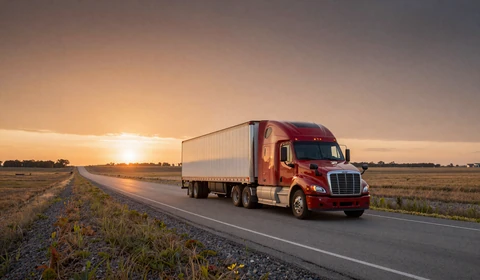
The romance of dating a truck driver is not Paris weekends. It is him FaceTiming you from the side of a Wyoming pasture at sunset, or saving the I-80 sunset photo to send when he parks. If small, real moments land for you, this lifestyle will feed you.
You value loyalty and consistency above flash
Truckers are, on average, hard workers, financially steady, and grounded in old-school values around family and reliability. They are not chasing trends. If you have wasted time on charm without substance, the contrast will feel like coming home.
Common Questions About Dating a Truck Driver
Is it hard to date a truck driver?
Dating a truck driver is harder than dating someone with a nine-to-five, but it is not the kind of hard most people assume. The difficulty is not loneliness itself - it is logistical: last-minute schedule changes, missed holidays, and asynchronous communication. Couples who succeed share three traits: independence on both sides, daily check-ins instead of constant chat, and fierce protection of home time. Around 11 home days per month is the OTR norm to plan around.
Is it hard to be in a relationship with a truck driver?
Yes and no. The hard parts are real - three weeks apart, plans that shift with dispatch, and weather delays that erase anniversaries. The strengths are also real: drivers who choose committed relationships tend to be exceptionally loyal, financially stable, and emotionally articulate because the lifestyle forces verbal communication over physical presence. Most long-term trucker couples report that the time apart actually deepens appreciation when home time arrives.
How often do truck drivers come home?
It depends entirely on the route type. Over-the-road (OTR) drivers typically come home every two to three weeks for two to four days. Regional drivers usually get home every weekend. Local and dedicated drivers come home nightly but often work twelve-hour days. Owner-operators set their own schedules but tend to stay out longest because empty miles directly affect their income.
What do truck drivers want in a partner?
Truck drivers consistently report wanting three things in a partner: independence, honesty, and patience with the schedule. Independence matters because they cannot be present for daily household decisions. Honesty matters because they have no bandwidth for emotional guessing games after a 14-hour shift. Patience with the schedule matters because freight, weather, and dispatch routinely override personal plans. Looks and shared hobbies come second to those three.
More from the TruckerConnections Blog
Long-Distance Relationships with Truckers
Three weeks apart, two days together - how couples actually make OTR marriages last for decades.
Read Guide
Truck Stop Loneliness & Modern Dating
Why 28% of drivers report serious loneliness - and how niche platforms help break the isolation.
Read Story
Online Dating Tips for Truck Drivers
Profile setup, cab photos that work, honest scheduling, and how to land a verified badge.
Read Tips